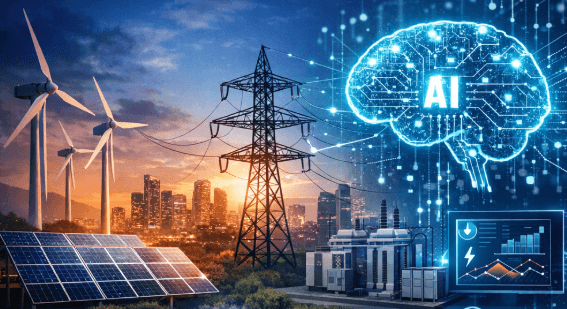
Technology is advancing smart energy distribution by enabling real-time visibility, predictive analytics, and autonomous optimization across the grid. Digital twins model physics and economics; IoT sensors supply pervasive data; edge computing reduces latency and bandwidth needs. Closed-loop control supports rapid anomaly detection, load shedding, and adaptive balancing, while secure data governance underpins transparent pricing and consumer engagement. The result is scalable, resilient, and cost-aware operations that challenge conventional approaches and prompt further inquiry into implementation trade-offs.
What Smart Energy Distribution Really Means
Smart energy distribution refers to the allocation and management of electrical power across a grid with real-time visibility, precision, and responsiveness. It analyzes grid dynamics to optimize flows, reliability, and efficiency. This framework emphasizes consumer engagement, transparent pricing signals, and adaptable controls. The result is a resilient system where operators balance supply and demand while empowering individuals to participate in energy choices.
How Digital Twins, IoT, and Edge Compute Drive Real-Time Balancing
Digital twins, IoT, and edge computing jointly enable real-time balancing by creating a closed-loop representation of the grid, enabling instantaneous visibility, prediction, and control. The approach supports autonomous optimization, rapid anomaly detection, and localized decision-making.
Digital twins model physics and economics; edge compute aggregates sensor data at the source, reducing latency and bandwidth while ensuring resilient, scalable, and transparent grid operations.
Ensuring Security and Resilience in Modern Grids
Grid anomaly detection informs load shedding decisions, while energy storage optimization and demand response programs support distributed generation integration and microgrid orchestration for robust reliability.
From Data to Decisions: Optimizing Costs, Reliability, and Sustainability
From data to decisions, the optimization of costs, reliability, and sustainability rests on disciplined data governance, predictive analytics, and integrated decision workflows. This approach enables cost forecasting accuracy and proactive reliability planning, aligning operational tactics with market dynamics.
Frequently Asked Questions
How Soon Can Consumers See Tangible Cost Savings From Smart Grids?
Answer: Tangible savings vary, but rapid adoption accelerates them; analysts project initial reductions within 1–3 years, with broader cost projections improving as grid efficiency scales and consumer participation grows, enabling early adopters to offset investments.
What Job Opportunities Arise From Smarter Energy Distribution Networks?
Profitable potentialPatterned progress: smarter distribution spawns skilled roles—engineering, analytics, cybersecurity, grid modernization, policy planning, and project management. The job-creating trajectory highlights jobs growth within evolving markets, while market dynamics drive demand for specialized, systems-oriented talent.
Do Smart Grids Affect Privacy of Household Energy Usage Data?
Smart grids influence privacy implications by exposing granular consumption patterns; however, data anonymization practices can mitigate risks, enabling useful analytics while preserving individual autonomy. Analytical assessment indicates effective privacy controls sustain freedom alongside system efficiency and security.
Can AI Predict and Prevent Outages Before They Occur?
An allegorical clockwork foresees cycles; AI forecasting suggests outages can be prevented via predictive analytics and fault isolation, enabling outage mitigation while balancing privacy concerns. Systematic evaluation reveals cost savings, regulatory impact, job creation, and evolving stakeholder freedom.
How Do Regulators Influence the Adoption of Smart Energy Tech?
Regulators influence adoption by shaping Regulatory barriers and Market incentives, balancing reliability with innovation. A systems-oriented view shows policies alter cost structures, create risk-managed incentives, and guide deployment timelines, enabling freedom to innovate while maintaining grid resilience and consumer protections.
See also: newsworlddaily
Conclusion
This integrated system furnishes a cohesive, real-time portrait of grid dynamics, where data streams translate into disciplined action. Digital twins, IoT, and edge compute knit a responsive fabric that anticipates, rather than reacts to, disruption. Security and governance guard trust, while storage, microgrids, and demand response broaden resilience. From data to decision, the architecture compresses complexity into clarity, turning volatility into value and steering energy distribution toward sustainable, cost-aware equilibrium with surgical precision.