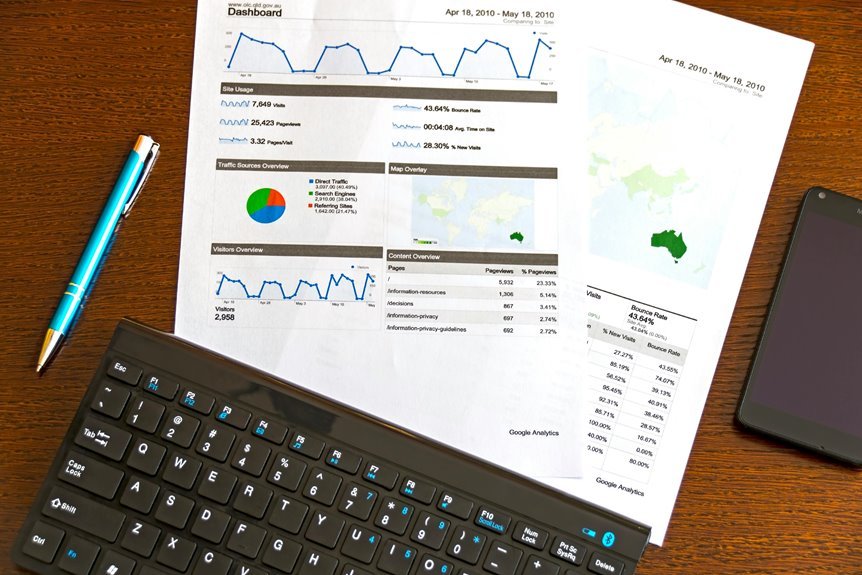
The Enterprise Growth Dashboard, identified by specific numerical codes, plays a crucial role in modern business strategies. It enables organizations to track key performance indicators, fostering real-time analytics that support informed decision-making. By enhancing data visualization, businesses can strategize effectively amidst market complexities. However, the true potential of this dashboard extends beyond mere data tracking, prompting a closer examination of its capabilities and the implications for operational efficiency.
Understanding Key Performance Indicators
Key Performance Indicators (KPIs) serve as critical metrics for assessing the effectiveness of various business strategies and operations.
KPI frameworks help organizations establish performance benchmarks that drive accountability and strategic alignment.
By identifying relevant KPIs, businesses can monitor progress, optimize processes, and ultimately enhance performance.
This precision in measurement empowers companies to navigate their growth trajectories with clarity and purpose, fostering an environment of freedom and innovation.
Real-Time Analytics for Informed Decision-Making
Effective decision-making in a dynamic business environment increasingly relies on real-time analytics. Organizations leverage real-time insights to enhance data accuracy, enabling swift, informed choices that adapt to market changes.
This immediate access to relevant information empowers leaders to identify trends, optimize resources, and mitigate risks effectively. Consequently, real-time analytics fosters a culture of agility, vital for sustaining competitive advantage in today’s fast-paced landscape.
Enhancing Data Visualization for Strategic Planning
As organizations strive to align their strategic goals with data-driven insights, enhancing data visualization becomes a crucial component of effective planning.
Navigating Market Complexities With the Dashboard
While navigating the complexities of today’s market, organizations increasingly rely on dashboards that synthesize vast amounts of data into actionable insights.
These tools facilitate in-depth competitive analysis and enable businesses to identify emerging market trends swiftly.
Conclusion
In conclusion, the Enterprise Growth Dashboard is not merely a data aggregation tool but a transformative asset that empowers businesses to thrive in complex markets. While some may argue that the initial investment in such technology is significant, the dashboard’s ability to deliver real-time insights and enhance strategic planning far outweighs the cost. By leveraging key performance indicators effectively, organizations can foster agility and drive sustainable growth, making it an indispensable resource for modern enterprises.